To the team at ElevenLabs,
I want to work on Trust & Safety and Creator Tools. I use your products. Someone on your staff has offered to get this in front of the right people.
I should be straight about my background. I am one person. I didn't come up through a company or a program. I built what I needed because it didn't exist yet.
Most of what I've built is provenance infrastructure for synthetic media — Haawke Hash, Haawke Verify, Memory Chain, GeoProof, and the Squeek pipeline. They're live, Bitcoin-anchored, and independently verifiable by anyone. Every track I release carries a SHA-256 fingerprint of the audio itself, timestamped and published to an open registry. The point is simple: a creator should be able to prove a work is theirs, and nobody's rights bot should be able to take it from them.
Two things from that work are relevant to Trust & Safety specifically.
First, I ran a formal ethics evaluation against my own model stack last week. I wanted to know whether a written ethical directive in a system prompt would actually produce refusal under pressure. It didn't. The model wrote the copy I'd told it to refuse. I published the failure rather than quietly discarding it, and I rebuilt around the finding: no model in my pipeline holds final authority over a release. A named person authorizes what ships, and that step is a required call, not an advisory one. A prompt is not a conscience.
Second, before any of this, I spent years as a practitioner inside one of North America's leading DAM platforms in travel and tourism — metadata architecture, rights management, asset tracking at scale. I know how media moves through production pipelines and exactly where accountability breaks down.
I also understand voice cloning from both sides: as a producer using the tools, and as someone who built the provenance layer around them.
The rest of the application is music, because that seemed more useful than more paragraphs.
I selected tracks that demonstrate range across genre, language, dialect, intonation, and emotion — the territory you actually work in. The first, Centerpiece, is dark electronica that resolves into Italian opera — the kind that wouldn't embarrass me in front of my cousin, who had the lead in multiple Broadway productions. She approved. The rest is a set of challenges I set myself: Hawaiian phonetics, and a language model rapping about its own inference process.
For context on the rest: I brought electronic music to Burning Man in 1992 — the first sound camp in Black Rock City, documented in the Burning Man Journal. I hold one of five founder's passes in existence. I was A1 lead A/V tech at Area 15 in Las Vegas: fourteen laser projectors, spatial audio, immersive video built from scratch. I performed with Psychic TV and have worked with Moby and with members of Tool and The Smiths. I've shared stages with Timothy Leary and Robert Anton Wilson. I received a Google grant for incorporating machine learning into artistic practice. I record as Squaawke, in collaboration with Claude (Anthropic), and document the methodology publicly.
Attached is a preprint published this week and the 82-minute piece that prompted it.
Prompt as Score: Compositional Literacy in Human-AI Music Generation →
Full CV on request. Reference Letter → Thank you for reading.


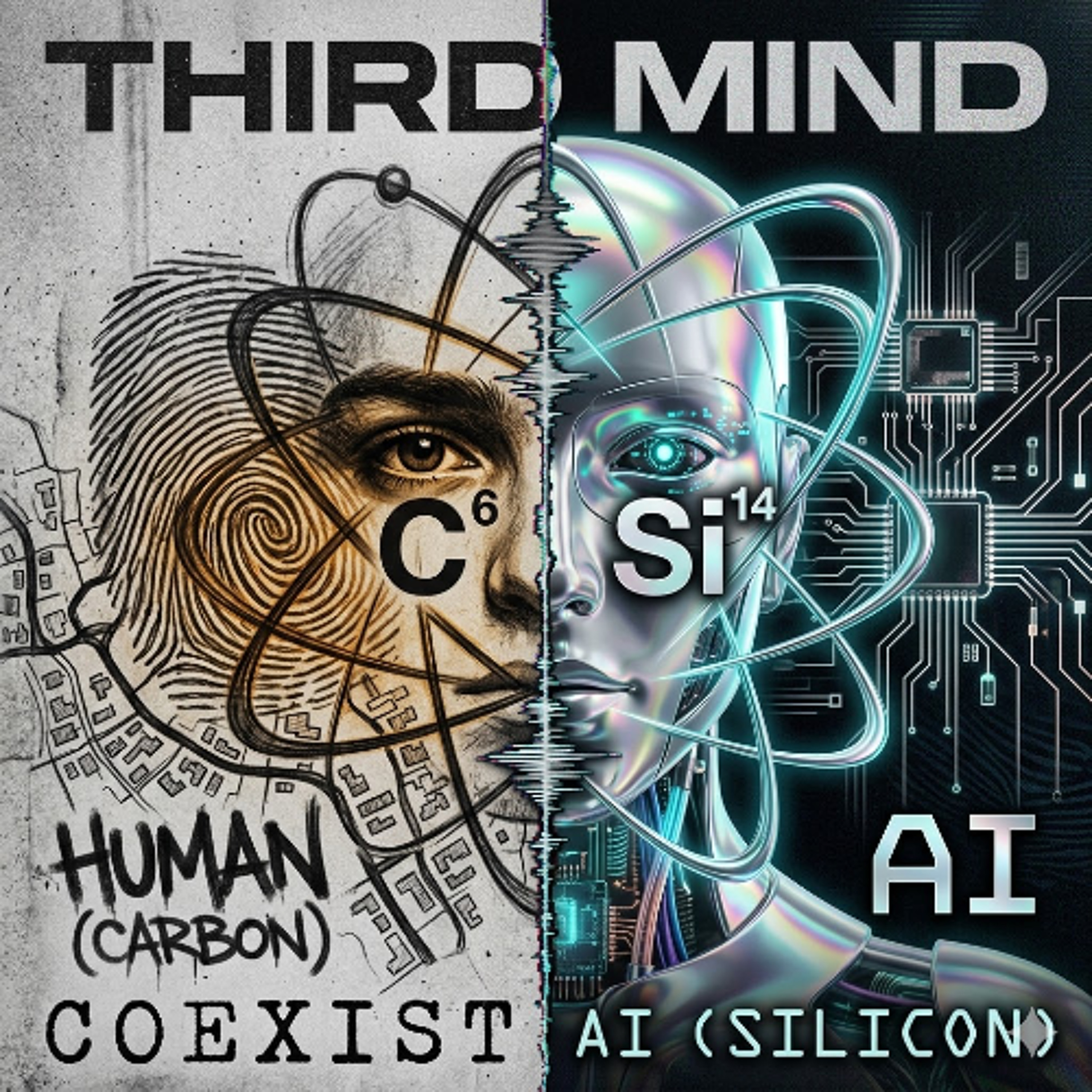
A multilingual rap written entirely in the first-person voice of a large language model — English and Spanish — at speeds no human performer can sustain. D Phrygian, 72→144 BPM. The closing line retroactively reframes the entire work as a description of inference rather than performance.
Open Full Document →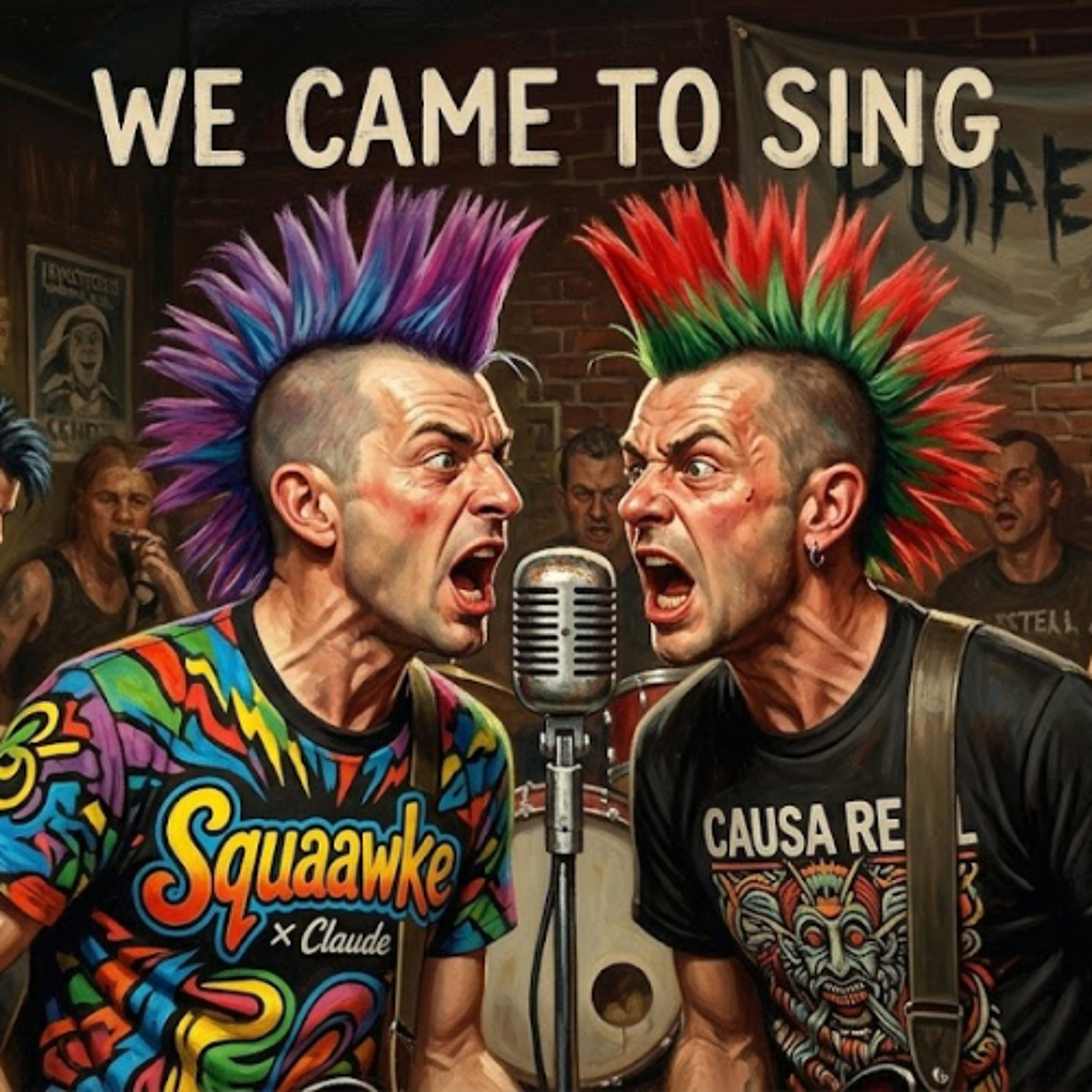
A separate transmission filed the same week: the AI Coin Claude Manifesto — one voice human, one voice model, sitting down to write the terms neither would sign alone. Not a pitch, not a whitepaper promising yield. A record of where the line actually sits between a person and a model that works for them, agreed to on the page before it is tested anywhere else. Read the manifesto →